Posture and Lower Back Pain | Embody Health Chiropractic
Sitting all day is blamed for back pain — but the evidence is more nuanced than 'sit up straight.' What actually helps your lower back.


'Sit up straight' is the usual advice — but the truth about sitting and back pain is more nuanced, and posture is only part of it. Here's what the evidence says about sitting, discs, and your lower back.
Why sitting causes lower back pain
Sitting for prolonged periods of time can be a major cause of back pain. A sitting posture raises the pressure on the intervertebral discs and keeps the lower back muscles under constant tension — especially when you slouch or hunch forward toward a screen. Poor posture while sitting flattens the natural curves of your spine, so the lumbar vertebrae absorb far more load than they should.
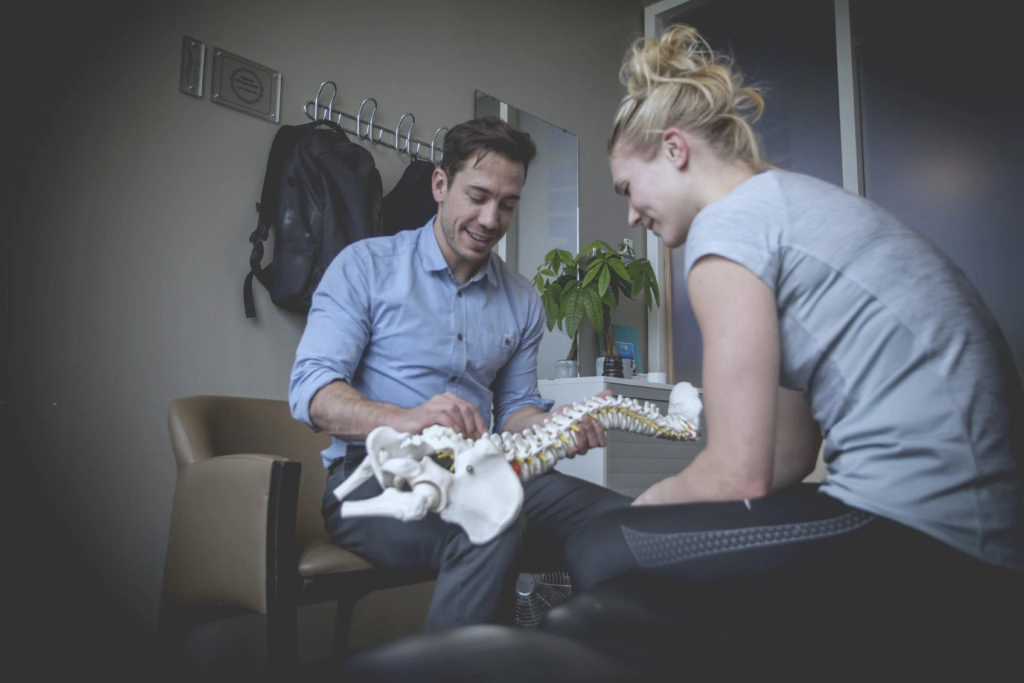
The good news: you do not have to stop sitting. What matters is how you sit and how long you stay in one position. Small changes to your workstation and your habits often make a real difference. If you cannot get on top of it yourself, our team looks at your posture and your spine's mobility during your first visit. Your first visit costs €39 and needs no GP referral; most Dutch health insurers reimburse chiropractic care from supplementary insurance, often without touching your deductible. In more than 12 years of practice we have helped over 2,500 people with back and neck complaints, with an average Google rating of 4.9 out of 5.
The spine-friendly sitting position
A neutral sitting position keeps the natural S-curve of your spine intact and puts the least pressure on the lower back. Here is how to sit spine-friendly:
- Sit with a straight back, letting your sitting bones carry the weight rather than your lower back.
- Keep both feet planted firmly on the ground, with knees and hips at roughly a right angle (90°).
- Support your lower back with a lumbar roll or a small cushion; avoid soft chairs and thick, low cushions you sink into.
- Relax your shoulders, keep elbows around 90° and wrists straight on the desk.
- Set the top of your screen at eye level so you are not constantly looking down or up.
Even with a perfect position, staying still in one spot eventually loads the back. The goal is therefore not to hold one 'perfect' posture for hours, but to switch positions regularly and keep your back moving in between.
Movement and micro-breaks
Your back is built to move. Change position every 30 to 45 minutes and stand up in between. A short walk, some stretching or a few squats changes the pressure on your discs and switches the lower back muscles back on. Even 30 seconds of standing helps. Your posture counts beyond the office too: lifting with a straight back and keeping the load close to your body prevents strain. Good posture is a daily habit, not something you only practice at a desk.
Did you know most Dutch health insurers (partially) reimburse chiropractic care without touching your deductible?
Check your coverageWhen a chiropractor can help
If lower back pain persists or keeps coming back despite posture and movement changes, a chiropractic assessment can pin down the actual cause — restricted spinal mobility, muscle tension or a radiating complaint — and turn it into a personal treatment plan. Read more about low back pain and sciatica and about radiating pain from a herniated disc. Never ignore serious signs: sudden loss of bladder or bowel control, or sudden numbness in the saddle area, requires urgent medical attention.
“Had 12 treatments for lower back pain; you are helped professionally with a treatment plan. Very satisfied and pain-free by now! I recommend it to anyone dealing with all kinds of pain complaints.”

Next time you search, get an answer this clear again — add Embody to your preferred sources.
Frequently Asked Questions
Which sitting posture causes lower back pain?
Slouching or hunching forward, especially on soft chairs or thick, low cushions you sink into, raises the pressure on your intervertebral discs and flattens the natural S-curve of your spine. Sitting still in one position for hours without changing also contributes to lower back pain.
Why does my lower back hurt when I sit?
Sitting increases the pressure on your intervertebral discs and keeps the lower back muscles constantly tensed. In a poor posture that tension grows, so the lumbar vertebrae take more load than they would in a neutral position.
Is sitting or lying down better for back pain?
Neither is good for long: lying down for hours weakens the back muscles, while long sitting raises disc pressure. With back pain, changing position regularly and moving in between works best. If the pain persists, an assessment can identify the cause.
Does an ergonomic chair help with back pain?
A good chair with lumbar support can take strain off your back, but no chair replaces movement. Combine a well-adjusted workstation with standing up and stretching every 30 to 45 minutes.
Can chiropractic care help with back pain from sitting?
Yes. During your first visit (€39, no GP referral) we assess your posture and your spine's mobility and put together a personal treatment plan. Most Dutch health insurers reimburse chiropractic care from supplementary insurance, often without touching your deductible.
Next time you search, get an answer this clear again — add Embody to your preferred sources.