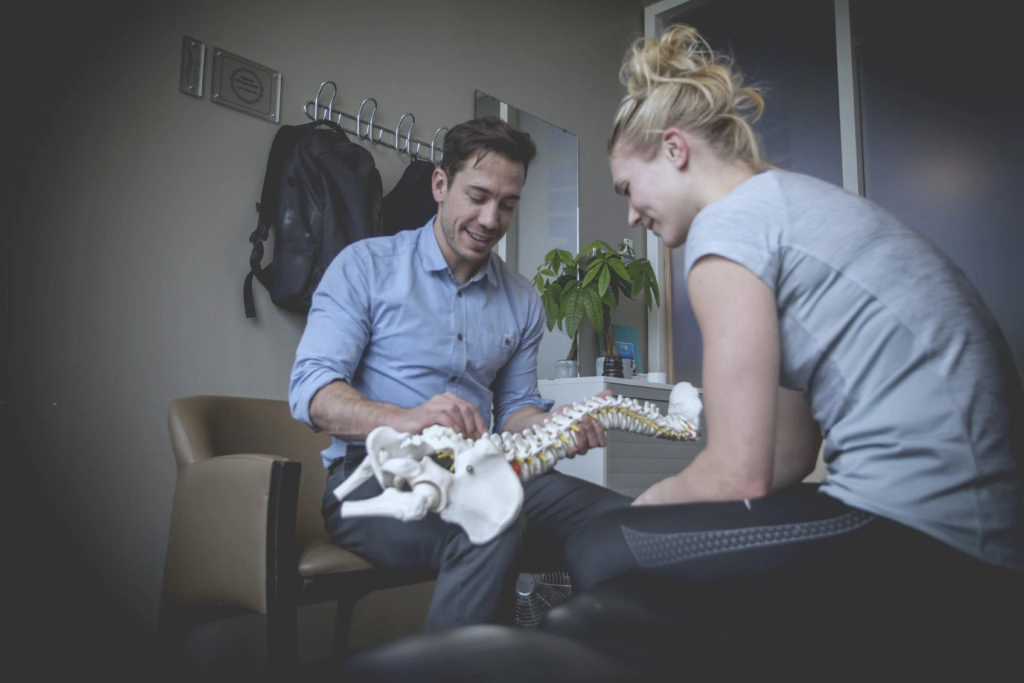
Suffering from jaw pain or jaw complaints?
Jaw pain or clenching? Read about the jaw joint, what you can do yourself, and how chiropractic care can help — no referral needed.

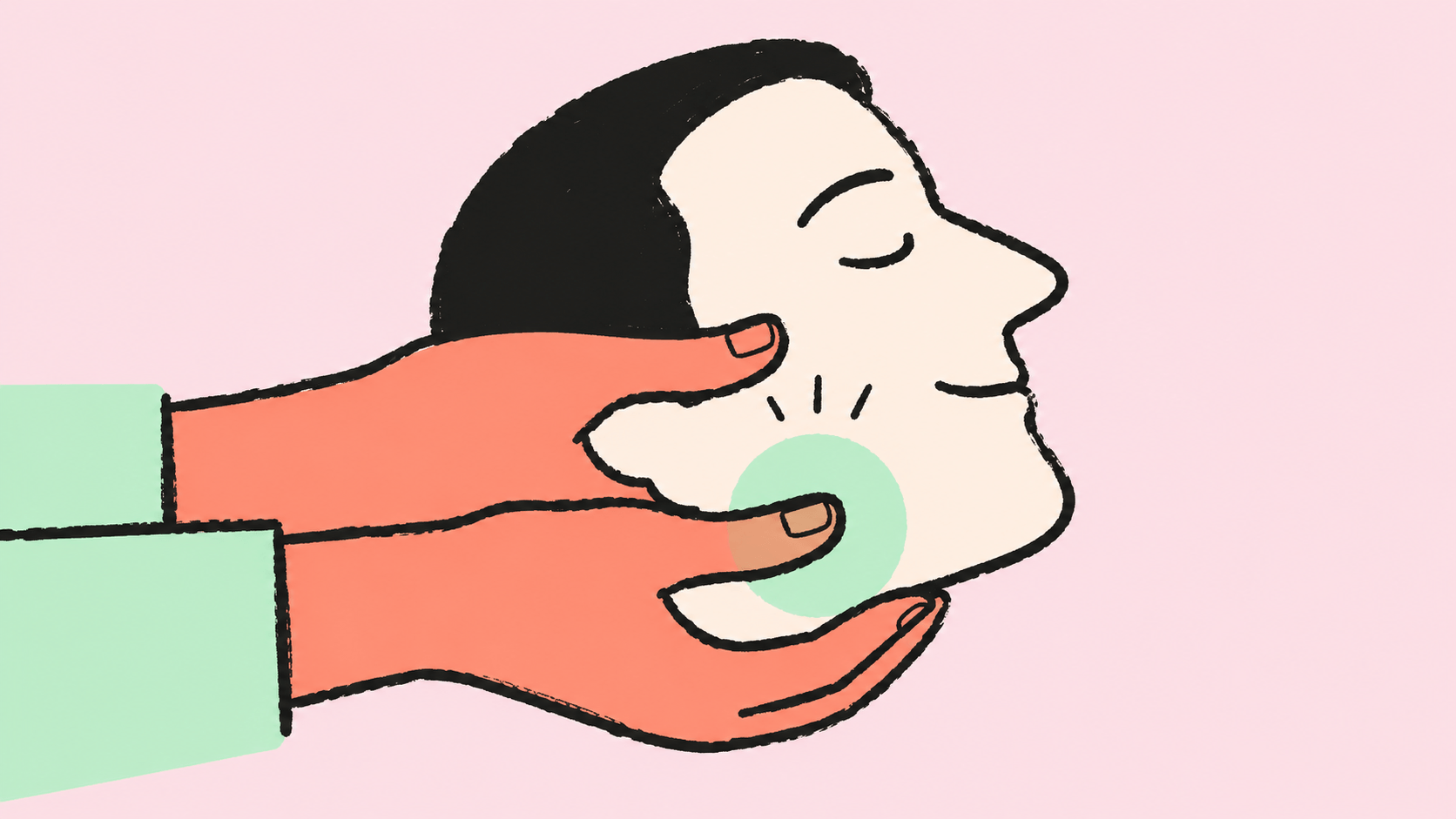
What are jaw complaints?
Jaw complaints are complaints of the jaw, the jaw joint, or the chewing muscles: a jaw that clicks or sometimes "locks", jaws that you clench without noticing, or teeth grinding at night. The medical name is TMD pain (temporomandibular disorder), a form of orofacial pain. Around 5 in 100 people will experience it, and the complaints can go together with headache, ear pain, or a creaking jaw. Most jaw complaints are harmless and well treatable, as Thuisarts also writes.
You can visit Embody Health Chiropractie without a referral from your GP; your first visit costs €39. The intake and physical examination make it clear right away whether chiropractic care fits your complaint. Most Dutch health insurers (partially) reimburse chiropractic care from the supplementary package, without touching your deductible.
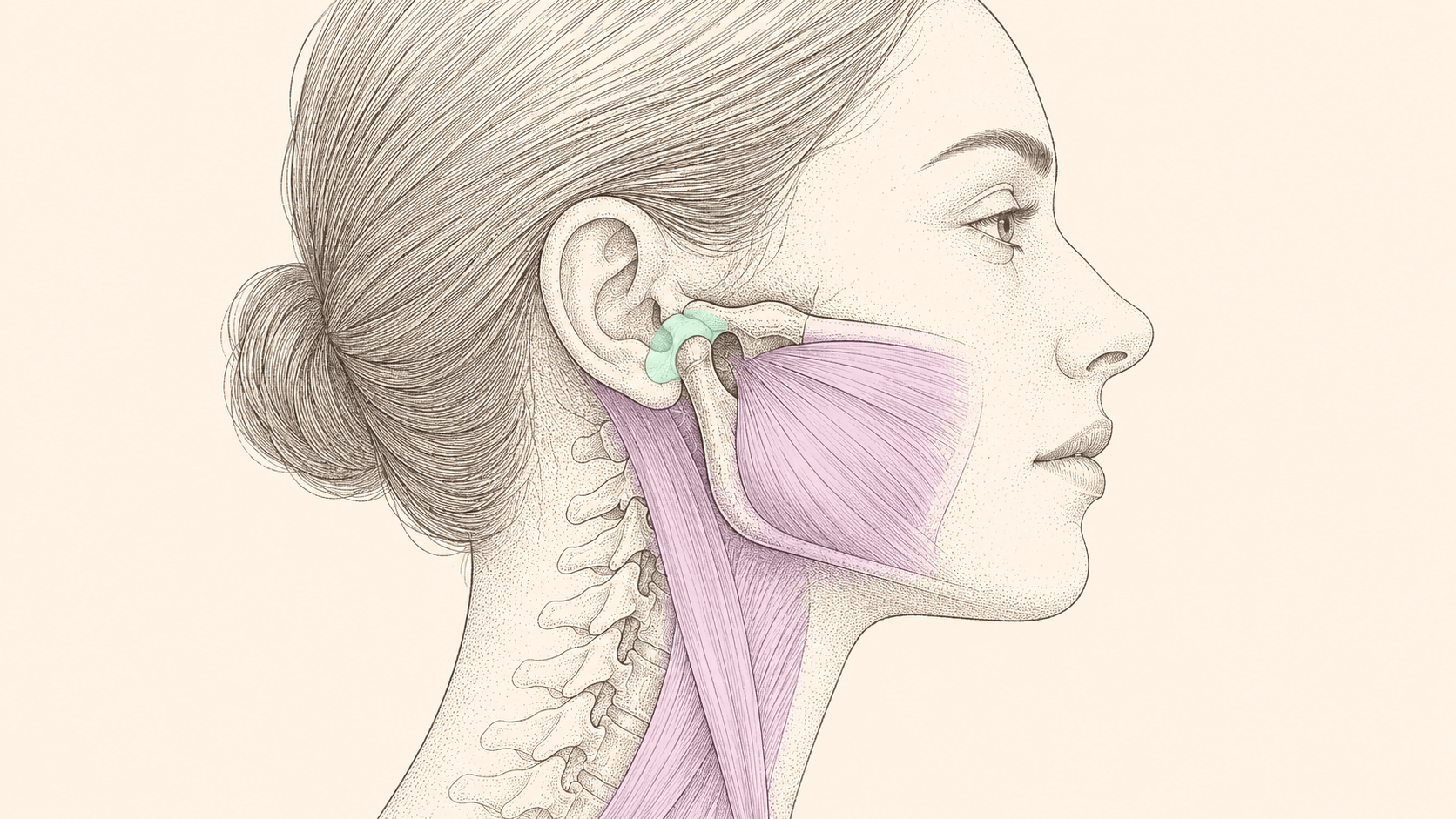
Many people immediately think of the dentist when they have jaw complaints, and that is sometimes the right first step, for example with a dental problem. But part of the jaw complaints is related to the neck and the upper cervical spine. The jaw joints work together with the muscles and joints of the neck and head; tension or restricted mobility in the neck can radiate to the jaw. It is that interaction that chiropractic care focuses on.
“Went in to have everything corrected. I always walked around with headaches from neck complaints. Since the treatments here, no more trouble. The staff is very skilled and friendly!!”

Symptoms of jaw complaints
Jaw complaints can show up in different ways. Do you recognize one or more of the following symptoms?
- pain in the jaw joint or around the ear and temple, especially when chewing, talking, or yawning
- a clicking, popping, or grinding noise when opening the mouth or when closing it
- a jaw that sometimes "locks": the mouth cannot be opened fully
- increased muscle tension in the jaw muscles, often with a stiff feeling in the morning
- clenching or teeth grinding, often at night, sometimes with wear of the teeth
- headache around the temples or ear pain without a clear cause
The mobility of the jaw is a good indicator: if you cannot open your mouth fully, or feel resistance when moving the jaw, it is wise to have this examined.
Did you know most Dutch health insurers (partially) reimburse chiropractic care without using your deductible?
Check your coverageWhat is the cause of jaw complaints?
The jaw joints (TMJ) are among the most used joints in the body: you use them when talking, eating, and swallowing. Jaw complaints usually arise from a combination of factors:
- Clenching and teeth grinding: many people clench the teeth together without noticing, during the day or in their sleep; that leads to overuse of the chewing muscles.
- Overuse: chewing gum often or chewing on hard things puts extra strain on the jaw joint.
- Stress: tension can settle in the jaw muscles, so you clench or grind without noticing.
- The neck: restricted mobility in the upper neck can pass tension on to the muscles around the jaw.
- Dental problems: an uneven bite or a disorder of the jaw joint itself often belongs with the dentist or a TMD specialist.
Treatment of jaw complaints: what can chiropractic do?
To reduce these jaw complaints, manual therapy can help. A systematic review of the effectiveness of manual therapy for jaw complaints shows that this approach can reduce pain and improve mouth opening, although the evidence on this point is still limited. A pilot study of chiropractic care for chronic jaw complaints also showed improvement in pain and mouth function. That matches what we see in practice: in many people the tension in the jaw muscles decreases and the movement of the jaw becomes supple again.
Thuisarts advises for jaw pain, among other things, a physiotherapist who massages muscles and gives exercises; chiropractic can be a fitting addition alongside that. Our treatment focuses on the interaction between jaw and neck. Dr. Stephen Malone (DC, DCF/SNRC) examines the mobility of the cervical spine, the tension in the jaw muscles, and how your jaw moves during your first visit. With gentle, precise corrections we reduce tension that is passed from the neck to the jaw and support the natural movement of the jaw joint. Together we draw up a treatment plan that fits your situation; which approach is best, we discuss honestly.
Your first visit costs €39; a single follow-up consultation costs €65 and a consultation in a recovery package €55. Check what your health insurance covers and the prices.
What you can do yourself for jaw complaints?
Try to consciously let go of the jaw muscles regularly and relax the jaws; normally there should be a small space between your teeth. Eat softer food, take small bites and chew calmly, and stop chewing gum and biting pens or nails. Avoid yawning too wide and try to reduce stress, because tension strengthens the clenching and grinding. A warm or cold compress on the jaw can ease the pain.
Do the complaints persist? Book a first visit and we will assess together whether chiropractic care fits your situation, or whether a dentist or TMD specialist is the better first step.

Frequently Asked Questions
What does a jaw complaints treatment cost?
Your first visit costs €39. Follow-up consultations are €65 (single) or €55 per consult in a package; child consultations are €35. Most Dutch health insurers (partially) cover chiropractic care from the supplementary package.
Can a chiropractor help with jaw complaints?
Chiropractic care focuses on the interaction between the jaw, the neck, and the cervical spine. Tension or restricted mobility in the neck can radiate to the jaw, so gentle, precise corrections of the cervical spine can reduce tension in the jaw muscles and improve the movement of the jaw joint. During the first visit we assess whether this approach fits your situation, or whether a dentist or TMD specialist is the better first step.
Why does my jaw click or sometimes lock?
A clicking jaw often occurs because the cartilage disc in the jaw joint does not move smoothly when opening or closing the mouth, often together with tension in the jaw muscles. A jaw that is completely locked, sudden swelling of the face or jaw, or jaw pain with fever first requires medical assessment. Clicking without those signals is common and can usually be examined and treated well.
Does chiropractic help with clenching or teeth grinding (bruxism)?
Clenching and grinding are often an unconscious habit linked to tension, in the jaw itself but also in the neck. When that tension comes from the cervical spine, chiropractic care can help reduce it. We look at the mobility of the neck and the tension in the jaw muscles, and give practical advice on relaxing the jaw during the day and at night.
When should I see a dentist or TMD specialist first?
With clear dental problems, such as an uneven bite, tooth wear, or pain in a tooth, the dentist is the right first step. Also contact a professional if you cannot open or close your mouth. Chiropractic care can follow alongside or afterwards, when the neck contributes to the complaints.
What can I do myself about tension in my jaw?
A few simple habits often help: keep your lips together with your teeth slightly apart so the jaw can relax, eat softer food, take small bites and chew calmly, stop chewing gum, avoid biting nails, and try to reduce stress, because tension strengthens the clenching and grinding. A warm or cold compress on the jaw can ease the pain.
Our first step: rule out dental and jaw problems
Most jaw pain is harmless and well treatable. As primary-contact practitioners, we screen every first visit for serious underlying causes. Contact us immediately if you experience:
- a jaw that is completely locked (you cannot open or close your mouth)
- sudden, severe swelling of the face or jaw
- jaw pain accompanied by fever
These require same-day assessment. Call us directly to consult the chiropractor — no GP referral needed. If unsure, check with your GP or with us.
Sources
- NHS: Temporomandibular disorder (TMD) — symptoms and self-care (accessed 28-08-2026)
- Systematic review: manual therapy for temporomandibular disorders (2022) — improvement in pain and mouth opening, evidence limited
- Pilot study: chiropractic care for chronic myofascial jaw complaints (DeVocht 2013) — improvement in pain and mouth function
Next time you search, get an answer this clear again — add Embody to your preferred sources.