Ringing in the Ears (Tinnitus): Causes and Treatment
Ringing in the ears can be linked to your neck. Read how chiropractic care can help and when an ENT specialist is the better step — no referral needed.


What is tinnitus or ringing in the ears?
Ringing in the ears can affect your days considerably. The reassuring news: for most people with tinnitus, nothing serious is going on. Tinnitus is the medical name for hearing sounds that do not come from an outside source. The sound sits in one ear, in both ears, or in the middle of your head, and nobody else can hear it. You may hear ringing, buzzing, whooshing, humming, hissing, or throbbing: loud or soft, high or low pitched, constant or coming and going. That is how the NHS describes tinnitus.
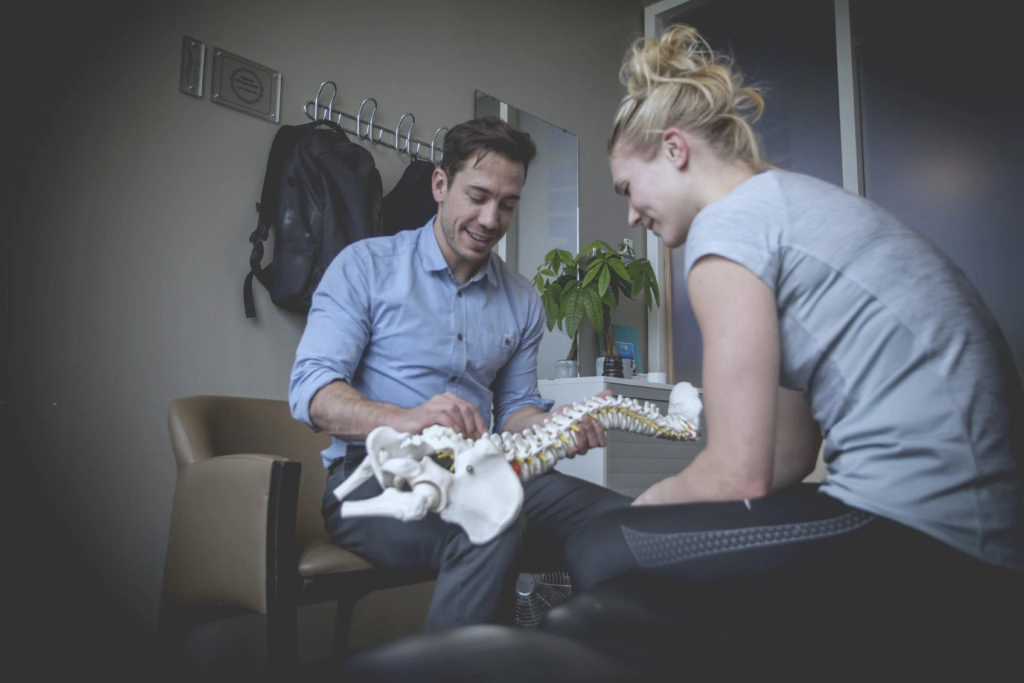
Do you feel the sound in your ear is linked to tension or stiffness in your neck? That is possible. During your first visit at Embody Health we look at whether your complaints could relate to the cervical spine: tension, blockages, or restricted mobility in the neck can influence the signals around the ears and the balance organ. Your first visit costs €39 and requires no referral from your GP. Most Dutch health insurers (partially) reimburse chiropractic care from the supplementary package, without touching your deductible.
In over 12 years, we have helped more than 2500 people across our three clinics in Alphen aan den Rijn, Amersfoort, and Rotterdam. Patients rate us on average 4.9 out of 5 stars on Google. Many people have lived with ringing ears for years without anyone looking at the whole picture. During the first visit we map in detail how your neck, spine, and health relate to each other.
Types of tinnitus: subjective or objective
There are different types of tinnitus. For most people the tinnitus is subjective: you hear the sound and nobody else does. Objective tinnitus is rare and can be linked to a sound source inside the body itself, such as a narrowed blood vessel or tiny muscle spasms in the middle ear. Tinnitus that beats in time with your pulse is called pulsatile tinnitus. We always discuss that signal first with your GP, just like tinnitus that started suddenly or sits in one ear only.
Symptoms of ringing in the ears
The sound is different for everyone: sometimes it barely registers, sometimes it dominates your day. Alongside the sound in the ear, these symptoms can occur:
- hearing loss or a full, dull feeling in the ear
- hyperacusis: everyday sounds come across louder or more unpleasant
- difficulty understanding speech, especially with background noise
- concentration problems, trouble sleeping, or a restless feeling
- tension, stress, or low mood from the persistent tinnitus
The impact of tinnitus mostly depends on how severe the complaints are. Most people with tinnitus get used to it over time, but chronic tinnitus can start to dominate daily life. The NHS describes which symptoms belong to tinnitus and what you can do yourself to cope better.
Causes of tinnitus
The cause of tinnitus is not always clear, but there are known triggers. Tinnitus is often linked to hearing loss, loud noise, stress, or ageing. Exposure to loud noises or loud music can damage the tiny hair cells in the inner ear. Working in noise for years, listening to music at high volume, or a sudden loud bang can all cause noise damage to the hearing nerve.
Tinnitus can have other causes too. Hearing loss is part of ageing and regularly comes with ringing ears. Ear conditions, such as a middle ear infection or abnormalities in the ear, sometimes play a role. High blood pressure can cause tinnitus, and some medicines list tinnitus as a side effect; your GP or pharmacist can tell you more. Ménière's disease is an inner ear condition with attacks of vertigo, tinnitus, and hearing loss. Part of the tinnitus complaints has nothing to do with the neck; that is why we take the medical side seriously and rule it out together with you first.
How can tinnitus start from the neck? The cervical spine contains nerves, joints, muscles, and ligaments that can all play a role in complaints around the head, ears, and balance. Tension in the neck and shoulder muscles, a forward head posture, or an earlier accident or whiplash can load the upper neck vertebrae. Whether that link applies to you is different per person; we map that during the first visit.
Our first step: rule out medical causes
A careful screening is part of every first visit at Embody Health. If the tinnitus started suddenly, sits in one ear only, or comes with hearing loss, your GP or ENT specialist should assess it first to rule out medical causes — and we gladly guide that process. The GP can do a hearing test and refer you to an ENT specialist or audiology centre if needed; tinnitus that beats in time with your pulse, tinnitus after a head injury, or tinnitus with sudden hearing loss needs urgent medical assessment. Once medical causes are ruled out, we investigate whether your cervical spine contributes: that is exactly where chiropractic can help.
Your chiropractor is a primary-contact practitioner — tinnitus like yours is what we assess daily, often before anyone else does. That is exactly what we're trained for: we screen for the rare serious causes of tinnitus, and most of the time the answer is good news. Most tinnitus is harmless and well treatable. Only 4 signals are worth flagging on your own:
- tinnitus that started suddenly in one ear, with hearing loss
- tinnitus that beats in time with your pulse (pulsatile tinnitus)
- dizziness with a very severe headache, chest pain, or sudden weakness
- tinnitus after a blow to the head or an accident
These deserve attention the same day. Contact us — we have 24/7 telephone availability; our front desk will notify the chiropractor right away if it looks urgent, and we'll assess your tinnitus and tell you honestly whether it needs hospital care; you need no GP referral and no detour. Not sure? Talk it through with your GP or with us — but we're here, and we'll screen it with you.
How can a chiropractor help with tinnitus?
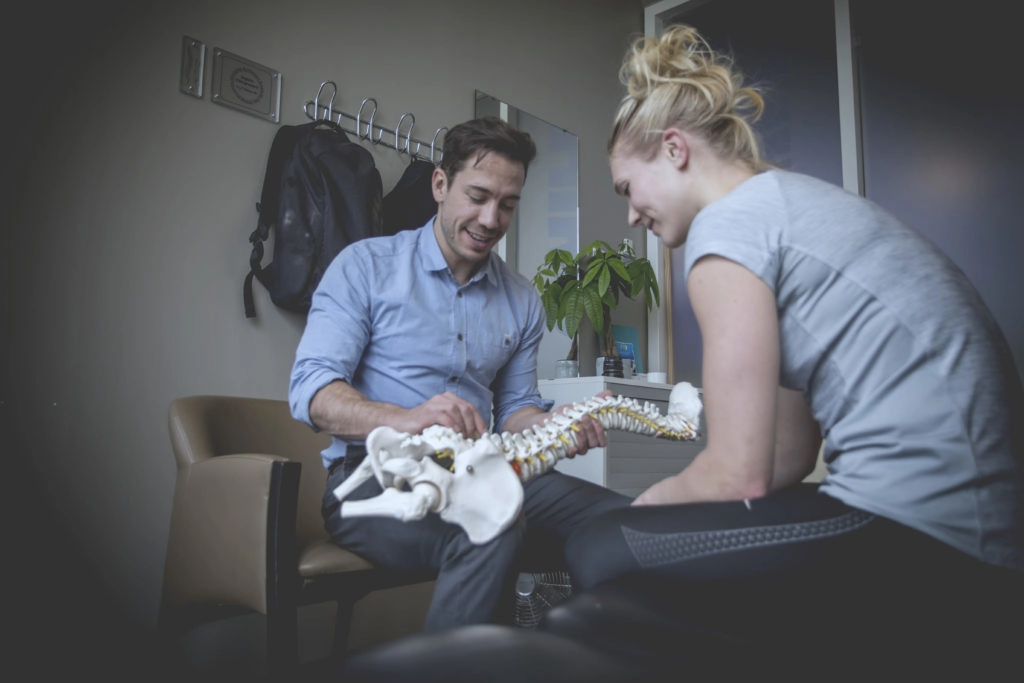
We start with an intake and a physical examination of your posture, neck, and spine. Orthopaedic and neurological tests tell us whether your neck plays a role in your complaints, or whether your GP or ENT specialist is the better first step. You get a careful approach and an honest assessment: together we determine whether chiropractic care is a useful addition and what you can realistically expect.
If your neck contributes to your complaints, we work with gentle, precise adjustments to restore the mobility of the neck joints and reduce tension in the surrounding muscles. Posture advice, relaxation exercises, and a personal treatment plan are part of the approach. For tinnitus linked to the neck — also called somatic tinnitus — the evidence is cautiously positive: a 2025 randomised trial found that manual therapy can reduce the distress, and a 2024 review names the same approach as a useful part of treatment. The studies are small, so we are honest about what you can expect. What you can realistically expect depends on the cause and how long your complaints have existed; we discuss that honestly during your first visit. We also map the treatment options for tinnitus outside our practice, such as a referral to an ENT specialist or audiology centre.
Your first visit costs €39 and requires no referral; a single follow-up consultation is €65 and a consultation in a recovery package €55. Child consultations are €35. See what your health insurer reimburses and the prices.
Did you know most health insurers (partially) cover chiropractic care from your supplementary package?
Check your coverageLiving with tinnitus
There is usually no treatment that makes tinnitus disappear. Care therefore often revolves around learning to cope with the sound, and that is also what the research advises. A Cochrane review on cognitive behavioural therapy for adults with tinnitus shows this approach can reduce the distress and anxiety around tinnitus, even though the sound itself stays. Distraction helps: staying busy, exercising, or relaxation exercises make you focus less on the sound. Try to reduce stress, because stress often makes tinnitus louder. Protect your hearing against loud noises so the complaints do not get worse. People with tinnitus and hyperacusis sometimes benefit from soft background sounds; with hearing loss, a hearing aid can make the tinnitus less prominent. Read more about neck and shoulder complaints if you suspect your neck plays a role.
“I had nagging complaints and started treatment here. I noticed a difference after the very first treatment. By the end of the treatment plan all complaints were gone and I walk and sit much more comfortably and easily.…”Read the full review
“I had nagging complaints and started treatment here. I noticed a difference after the very first treatment. By the end of the treatment plan all complaints were gone and I walk and sit much more comfortably and easily. I definitely recommend them! The ladies at the front desk are also nothing but kind and helpful.”

Frequently Asked Questions
What does a tinnitus and dizziness treatment cost?
Your first visit costs €39. Follow-up consultations are €65 (single) or €55 per consult in a package; child consultations are €35. Most Dutch health insurers (partially) cover chiropractic care from the supplementary package.
Is there a cure for tinnitus?
A genuine cure does not exist yet, and we are honest about that. What helps most people is learning to cope with the sound, for example with cognitive behavioural therapy, sound therapy, or a hearing aid when hearing loss plays a role. When your neck and cervical spine contribute, chiropractic care can reduce that contribution, which may make the sound softer or less prominent for some people. Others need a different route, such as an ENT specialist.
Can a misaligned neck cause tinnitus?
Restricted mobility in the upper cervical spine can influence the nerves and muscles around the ears and the balance organ. Not every tinnitus is neck-related, and that is why we examine carefully during your first visit whether your neck plays a role in your case. If not, we honestly tell you that an ENT specialist or GP is the better route.
What exercises can help reduce tinnitus?
When neck tension is part of the picture, gentle exercises that relax the neck and shoulder muscles can help reduce that tension: slow neck movements, shoulder relaxation, and posture awareness. Together we look at which movements fit your situation, alongside any guidance you receive from your GP or ENT specialist.
What are the symptoms of tinnitus?
Tinnitus is a ringing, buzzing, hissing, or roaring sound that only you hear. It can come with a full or dull feeling in the ear, reduced hearing, dizziness, balance problems, and neck stiffness. The sound can be constant or come and go, and its intensity often varies with tension, fatigue, or stress.
When should I see an ENT specialist for tinnitus?
If the tinnitus started suddenly, is in one ear only, or comes with hearing loss, dizziness, or other signals, your GP or ENT specialist should assess it first to rule out other causes. Chiropractic care is not a treatment of the ear; we investigate whether your cervical spine contributes, and that is only useful after other causes are ruled out.
Sources
- NHS: Tinnitus — symptoms, causes and treatment (accessed 28-08-2026)
- MedlinePlus: Tinnitus — summary and treatment options (accessed 28-08-2026)
- Cochrane review: Cognitive behavioural therapy for adults with tinnitus (2020) — less distress and anxiety around tinnitus
- Randomised trial: manual therapy for somatic tinnitus (2025) — less distress in some people
- Review: cervicogenic somatic tinnitus (2024) — the role of neck and jaw in ringing ears
Next time you search, get an answer this clear again — add Embody to your preferred sources.